
Health Advice
Save women from cervical cancer
Published : Saturday, 14 April, 2018 at 12:00 AM Count : 1400
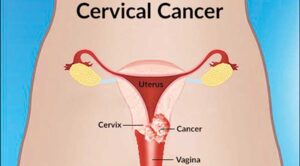
Do you like to live with cancer, or die of it? The answer is no, definitely not. No one likes to get cancer. The American actress Jennifer Aniston perfectly said, “Cancer affects all of us, whether you’re a daughter, mother, sister, friend, coworker, doctor, or patient.”
Cervical cancer is one of the fatal diseases of which women suffer from the most. Cervical cancer is probably the best understood and most preventable of all major human malignancies. Cervical cancer varies widely, inversely related to the effectiveness of prevention programs. Almost 90 per cent of deaths occur in low-income and middle-income countries due to cervical cancer. In high-income countries, cervical cancer has been relatively well controlled by expensive but effective prevention programs based on cervical cancer screening.
If we analyze the word cancer there is a “can” in this word. That shows us the light of beating cancer and undoubtedly it would be possible through prevention. That’s why we need, research-based, authentic information first. The more we share the right information with right person at the right time, the more we become aware.
Cervical cancer affects the lower part of the women’s womb or uterus, known as cervix. It is second in the list among the cancers from which the women of developing countries suffer the most. Commonly, this cancer mostly occurs in cases from thirty five to fifty five years of age. Every girl or woman should ask herself, “How is my cervix doing?” If she can’t answer the question, it’s time for having an investigation. Women should not wait for arrival of a disease rather they should invest in prevention of it.
Research shows that cervical cancer is an important public health problem worldwide. According to the World Health Organization (WHO), nearly 80 per cent of cases occur in low-income countries, where cervical cancer is the most common cancer in women. Cervical cancer is a major problem in Bangladesh. International Agency for Research on Cancer (IARC) informed that in Bangladesh about 11,956 women are diagnosed with cervical cancer every year; and over 6,582 women die of it each year. But early diagnosis helps preventing, and treating the disease and saving the lives.
Dr Habibullah Talukder Raskin, an associate professor of National Cancer Research Institute and Hospital said at a seminar that the majority of cervical cancer cases occur in mid-age rather than old-age and it is one of the most common cancers among women under the age of 35. “Preventative cervical screening programmes could avoid cervical cancer deaths and provide a means of early detection. When the disease is detected early, it is highly treatable and is often associated with long survival and good quality of life outcomes,” Dr Raskin added.
The patients, who are suffering from cervical cancer, would get treatment at an affordable price at city hospitals, including National Institute of Cancer Research & Hospital, Bangabandhu Sheikh Mujib Medical University (BSMMU) Hospital, United Hospital and Delta Medical College & Hospital.
Dr Shakira Nova Public health specialist, researcher, and TV anchor
Poet and lawmaker Kazi Rosy, who has survived the cancer for 22 years, said at the same seminar, “Families and society should extend supports to increase the mental strength of the cancer-affected persons.”
Child marriage, early age of first pregnancy, too many and too frequently childbirth, low socioeconomic status, multiple sexual partner, having male counterpart who has multiple sexual partners, lack of hygiene, sexually transmitted diseases, immune suppressed (HIV positive) individual, long time use of oral pill, smoking, lack of using barrier method (Condom) and above all lack of education are the risk factors for girls and women to get cervical cancer.
Infection by a virus called Human Papillomavirus (HPV) is responsible for most cases of cervical cancer and most people are infected with HPV shortly after the onset of sexual activity. So, considering the worst impacts, let us say together “Big NO to Child Marriage”.
So, prevention is the key to fight this deadly disease. In addition, cost-effective cervical cancer screening and vaccine are also available in Bangladesh that can effectively prevent this cancer. Any girl from nine years onwards can take this vaccine. But it will be more effective if taken before marriage.
Women can take precaution to remain free from the cervical cancer. For example, don’t let your daughter get married before 18 years of age, refrain from conceiving child at early age, at least not before 21 years, and abstain from having physical relationship with more than one partner. And above all, the frequency of this cancer can be decreased by 70 per cent to 80 per cent through taking the vaccine which is available in Bangladesh.
There is lack of awareness among the general population including girls and women. Health care professionals must play important roles in disseminating information through counseling whenever and wherever get the opportunity. Very effective measures must be taken to build awareness about the disease and to prevent it to save the valuable lives of girls and women in our country and the globe as well. So, all the girls and women must keep in mind that one ounce of prevention is better than one pound of treatment of cervical cancer, even of any other diseases.
